



SargaThai
SargaThai en ligne
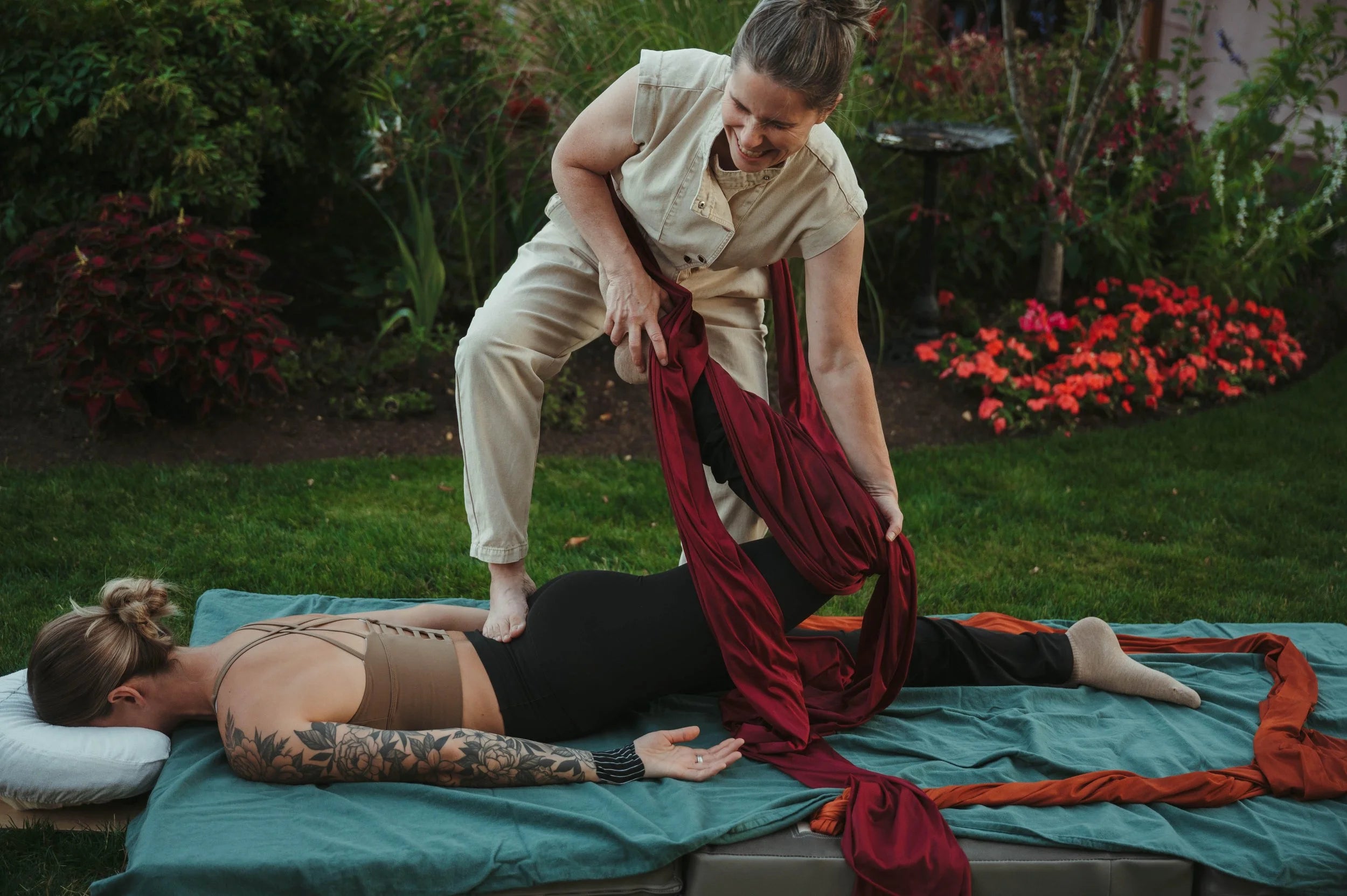
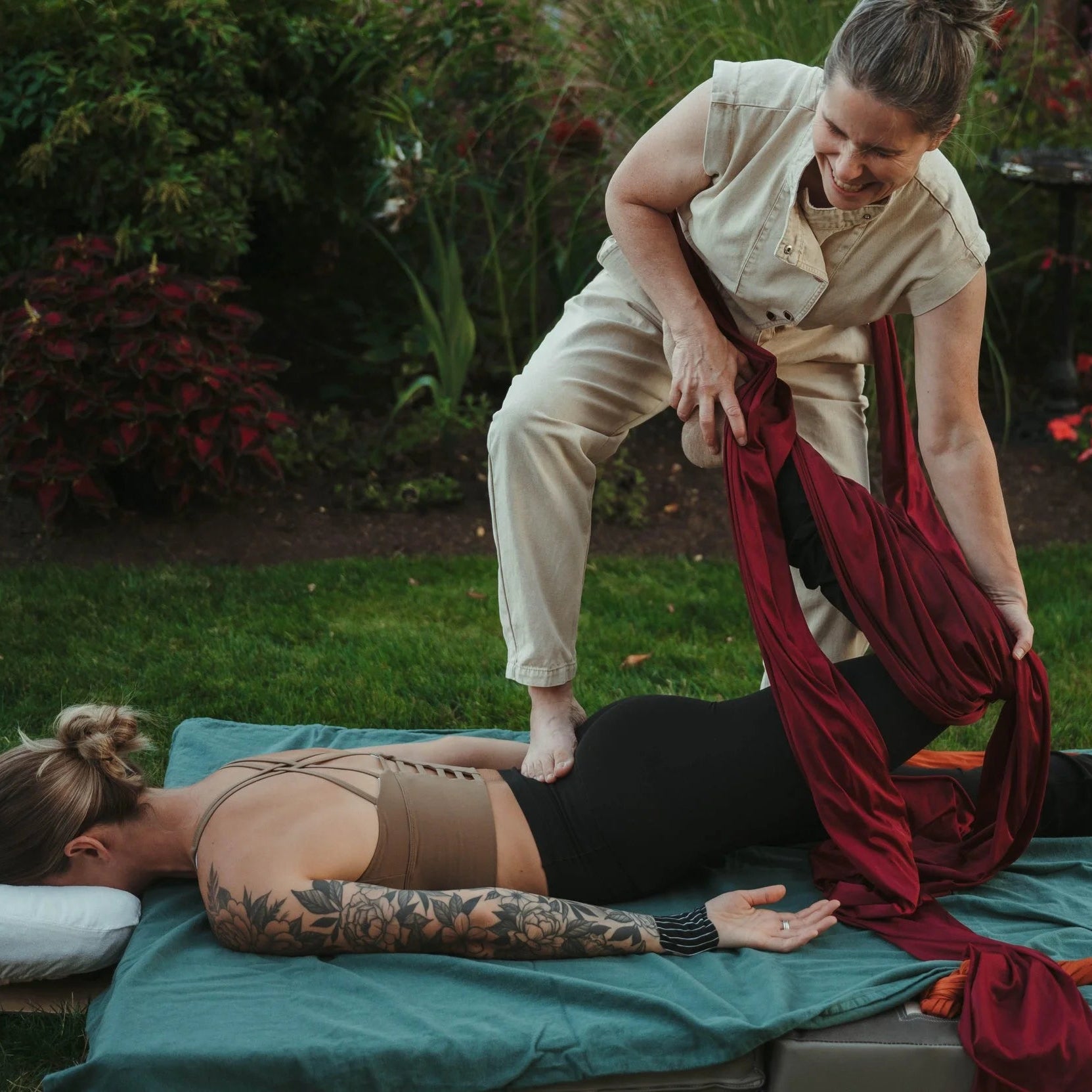
En associant les étirements traditionnels thaïlandais aux techniques myofasciales de Sarga, ce cours vous apprend à utiliser vos pieds, le Sarga Silk et l’équipement au sol pour offrir des séances lentes et puissantes, agréables autant pour le praticien que pour la personne recevant la séance.
Conçu pour les praticiens souhaitant intégrer des étirements, explorer les fascias et travailler avec créativité et intuition. Si vous avez déjà souhaité rendre le travail corporel plus fluide, intuitif et durable, ce cours est un excellent point de départ.
Ce cours en ligne fournit 5,5 unités de formation continue à la fin de la formation (NCBTMB #1001049).
À associer avec
SargaThai en ligne
Nous sommes là pour vous accompagner à chaque étape de votre parcours Sarga Bodywork.
Que vous ayez des questions sur les formations, le matériel ou votre pratique, vous trouverez des réponses ci-dessous ou pourrez contacter directement notre équipe.
-
FAQ
Trouvez des réponses aux questions fréquentes concernant les formations, la certification, la compatibilité du matériel et l’intégration de Sarga Bodywork dans votre pratique.
-
Contactez-nous
Bénéficiez d’un accompagnement personnalisé de notre équipe pour toute question concernant la formation, le choix du matériel ou l’intégration de Sarga dans votre pratique.
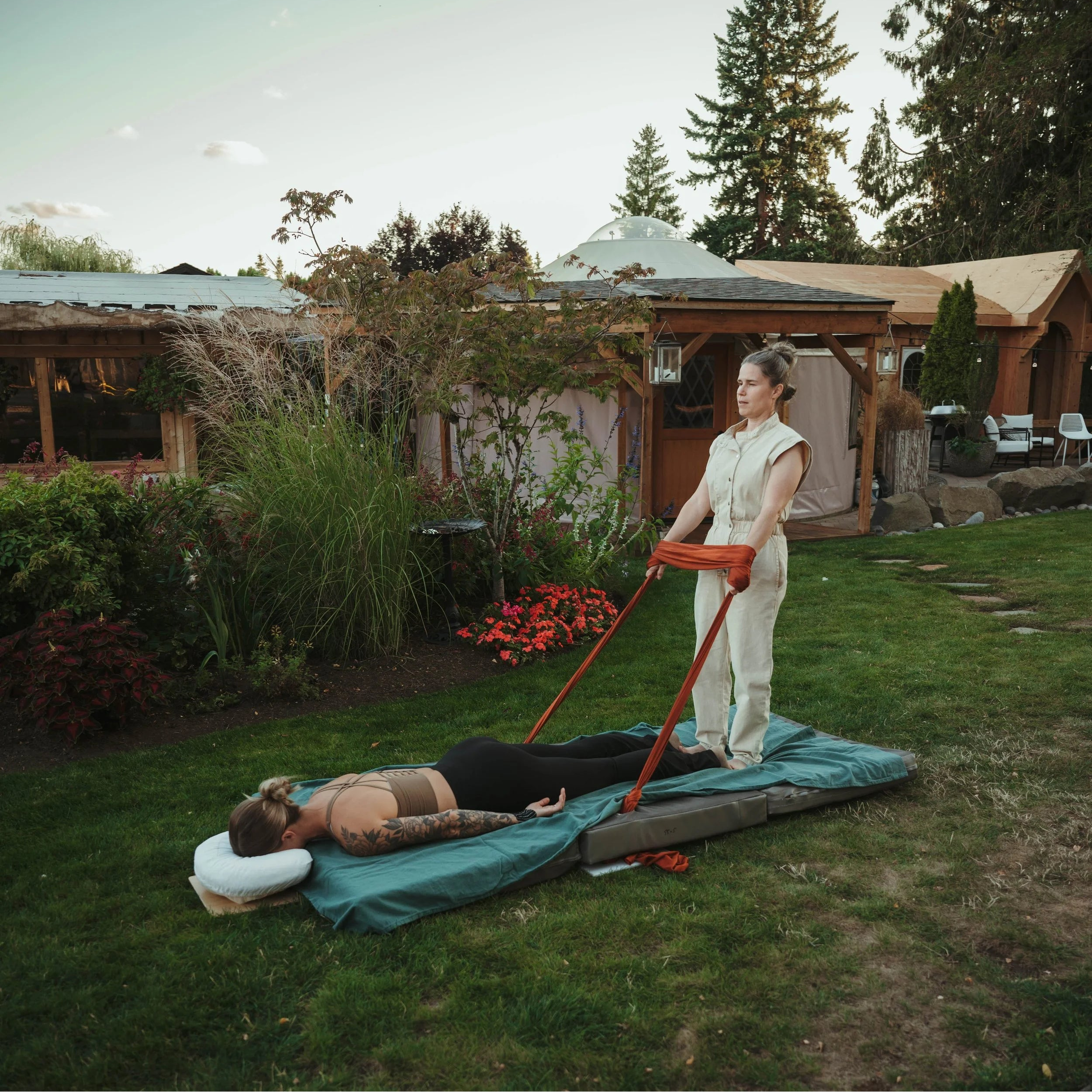
Ce cours a été conçu pour :
- Praticiens de massage qui apprécient le massage thaïlandais et souhaitent l’enrichir par un travail myofascial au pied nu avec le Sarga Silk.
- Diplômés de Sarga Bodywork prêts à intégrer plus d’étirements, de mouvement et de créativité à leurs séances au sol.
- Praticiens expérimentés recherchant des séances plus dynamiques pour leurs clients et moins éprouvantes pour leur propre corps, tout en offrant un travail fascial profond et précis.
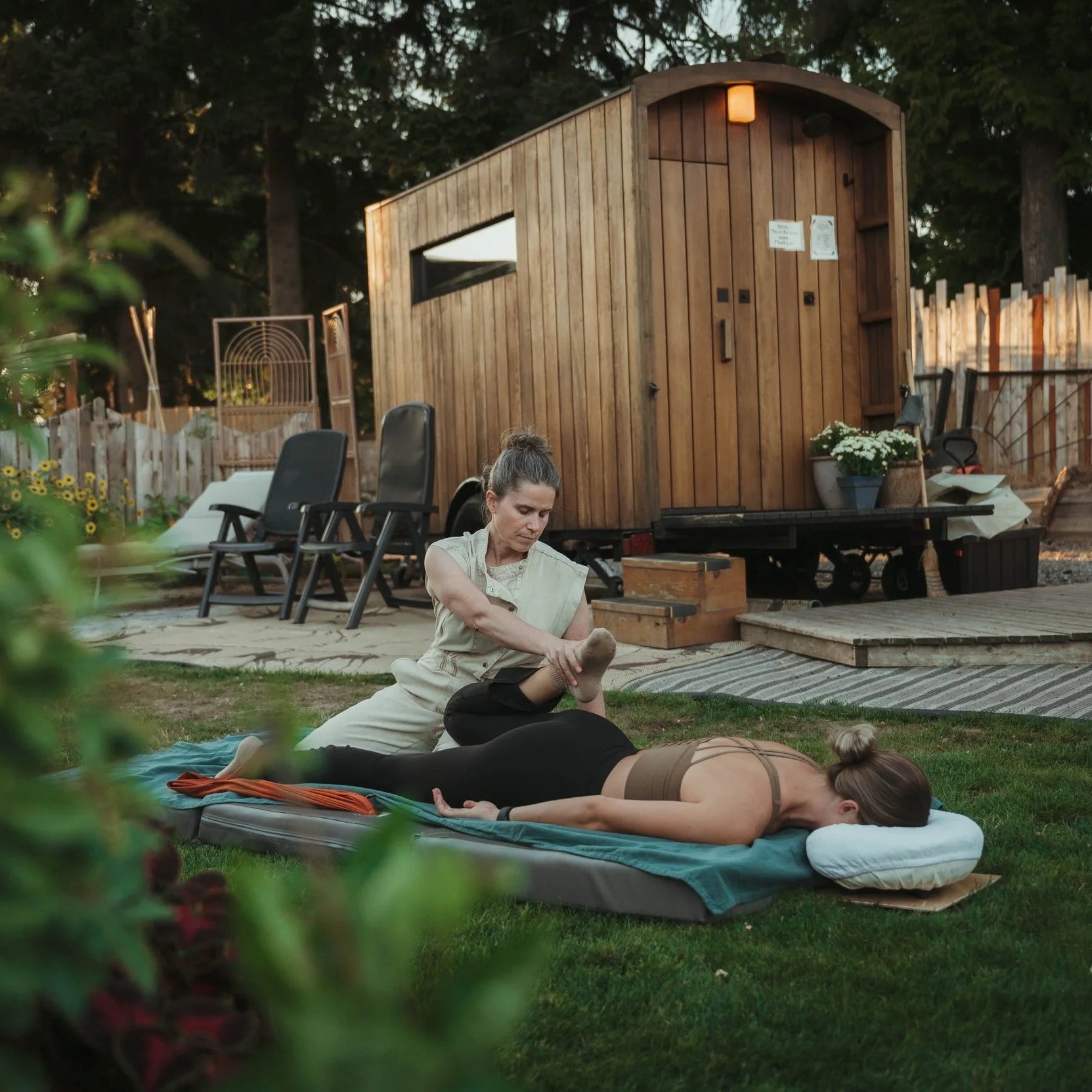
À quoi s’attendre dans SargaThai Online :
- Une séquence de 90 minutes à 2 heures qui intègre des techniques de Sarga Bodywork avec des techniques de massage thaï.
- Apprendre l’art d’étirer le corps d’une autre personne à l’aide de techniques de base du massage thaï.
- Techniques de massage myofascial de base réalisées avec les pieds issues de Sarga Bodywork.
- Techniques de compression utilisant la Sarga Silk pour l’équilibre et le soutien.
- Mécanique corporelle destinée à minimiser la fatigue du corps du praticien.
- Comment utiliser la Sarga Silk avec des techniques d’étirement, similaires aux techniques traditionnelles du Pha Khao Ma en massage thaï.
À quoi s’attendre lors de SargaThai en présentiel :
- Une introduction à l’univers dynamique du massage thaïlandais.
- Un aperçu des techniques de base du massage thaï soigneusement sélectionnées.
- Un aperçu des techniques essentielles Sarga 101 soigneusement sélectionnées.
- Une séquence de 90 à 120 minutes comprenant des techniques en position ventrale et dorsale.
- Mises en garde et contre-indications pour Sarga-Thai.
- Installation et utilisation du matériel SargaThai.
- Voir les prochains stages SargaThai en présentiel.
Rencontrez votre formateur
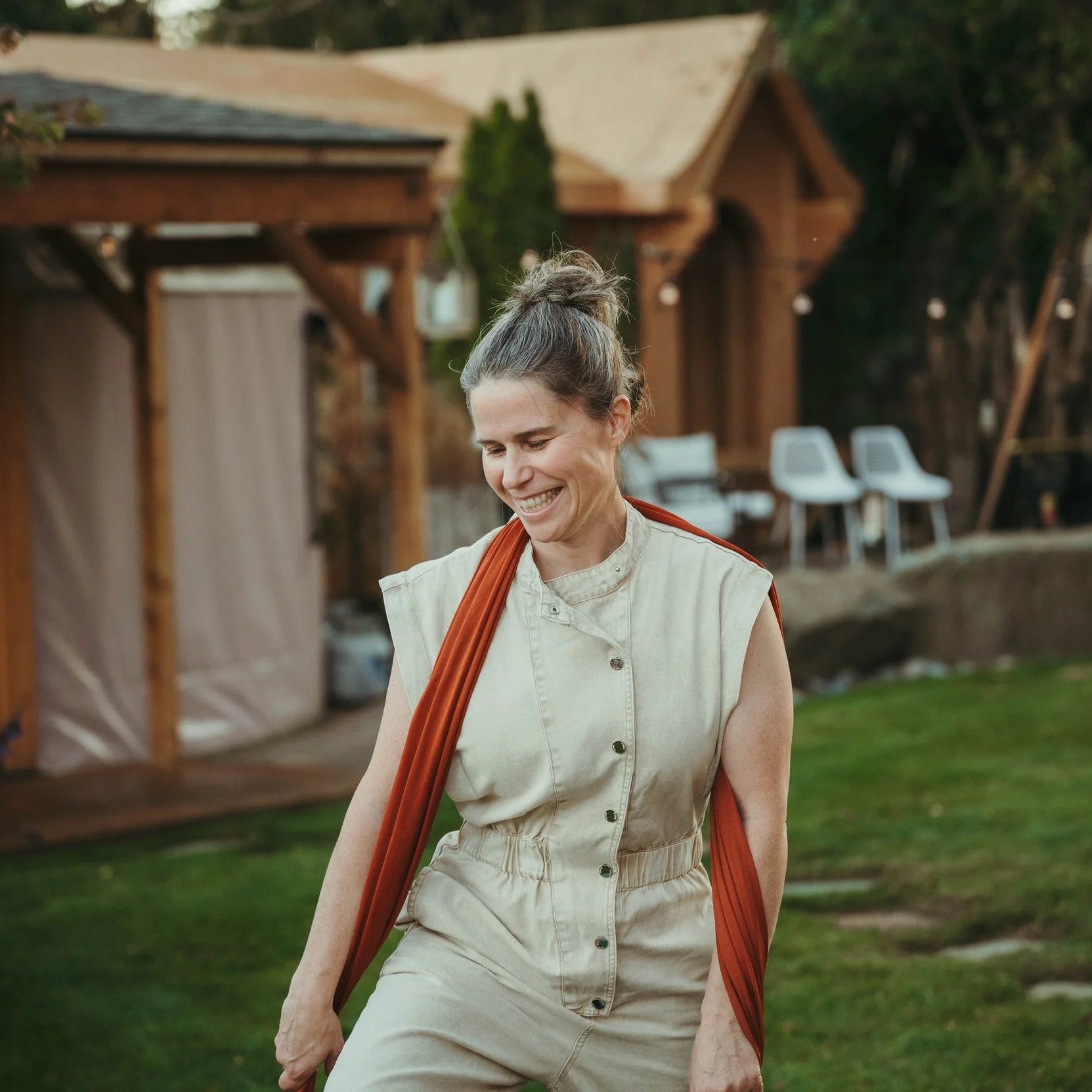
Kristi Kutzera s’est tournée vers le travail corporel grâce au yoga. Après avoir obtenu sa licence de massage en 2015, elle a découvert sa passion pour le massage thaïlandais, mais avait toujours le sentiment qu’il manquait quelque chose.
Après avoir suivi la formation Sarga, elle a trouvé un véritable « chez-soi » en réunissant le travail fascial de Sarga et le mouvement passif du massage thaïlandais.
Foire aux questions
Trouvez des réponses aux questions fréquentes sur la formation, les techniques et le matériel Sarga Bodywork.
Quelles sont les prérequis pour suivre la formation SargaThai ?
Aucun prérequis n'est nécessaire pour SargaThai Online.
Les prérequis suivants s'appliquent pour SargaThai en présentiel :
- Vous devez satisfaire aux exigences de licence de massage de votre pays ou région (le cas échéant ; sinon, contactez-nous pour vérifier votre éligibilité).
- Vous devez disposer d’une assurance responsabilité civile et assurances professionnelles à jour dans le pays ou la région où vous pratiquez (le cas échéant ; sinon, contactez-nous pour vérifier votre éligibilité).
- Vous devez être à l’aise avec le travail corporel au sol.
Proposez-vous des crédits de formation en ligne pour les cours SargaThai en présentiel ?
Oui ! Recevez un crédit de 200 $ à valoir sur un stage SargaThai en présentiel dans l’année suivant votre achat de SargaThai Online.
Où puis-je consulter le programme du cours en ligne SargaThai Online ?
Vous pouvez consulter le programme de formation SargaThai en ligne ici.
De quel équipement ai-je besoin pour SargaThai ?
- Un tapis associé à une Sarga Board OU une table de massage portable (position au sol) avec les accessoires Sarga.
- Un tapis de yoga ou un tapis antidérapant à placer sous votre table ou votre tapis.
- Deux Sarga Silks (une fixée, une libre).
- MYO.RUB
À qui s’adresse SargaThai ?
- Les praticiens de massage qui apprécient le massage thaïlandais et souhaitent l’enrichir grâce à un travail myofascial au sol réalisé avec la Sarga Silk.
- Les diplômés de Sarga Bodywork qui souhaitent apporter plus d’étirements, de mouvement et de créativité à leurs séances sur le sol.
- Les praticiens expérimentés en travail corporel qui cherchent à proposer des séances plus dynamiques pour leurs clients et moins exigeantes physiquement pour eux-mêmes, tout en offrant un travail fascial profond et précis.
Quel niveau de forme physique est requis pour SargaThai ?
SargaThai deviendra sans aucun doute plus facile avec la pratique, mais l'apprentissage de cette méthode peut être assez exigeant au début et une excellente condition physique (en particulier une bonne force isométrique) est indispensable pour tirer le meilleur parti d'un cours de SargaThai. Le yoga, le Pilates, la danse, les arts martiaux ou toute activité corporelle complète favorisant à la fois la force et la souplesse vous aideront à vous préparer à la pratique du SargaThai.
4 critères de condition physique
Voici quatre critères de condition physique qui peuvent vous aider à évaluer votre capacité à apprendre et à pratiquer SargaThai avec succès :
- La capacité de tenir en équilibre sur un pied pendant au moins 1 minute sans vous appuyer sur quoi que ce soit.
- Une excellente endurance cardiovasculaire et la capacité d'effectuer un exercice d'endurance (jogging, natation, etc.) pendant 10 à 15 minutes sans interruption.
- La capacité de réaliser au moins 3 séries de 20 squats.
- La capacité de maintenir une planche isométrique pendant au moins 1 minute.
Si vous souhaitez des conseils pour renforcer votre condition physique afin d'apprendre et de pratiquer SargaThai en toute confiance, notre cours en ligne Sarga Fit est une excellente ressource, conçue spécifiquement pour répondre aux exigences physiques du SargaThai et du Sarga Bodywork.
Pourquoi utilisez-vous vos pieds ?
Les pieds sont d’excellents outils de thérapie manuelle, et en tant que praticien·ne de travail corporel, la capacité d’effectuer un massage avec les pieds offre de nouvelles possibilités biomécaniques.
Le massage avec les pieds nus est une pratique ancienne, notamment dans certaines régions d’Asie et du Pacifique. Cette approche regroupe des techniques de thérapie manuelle appliquées sur le corps du receveur avec les pieds nus du praticien.
Ces techniques reproduisent souvent des gestes réalisés avec les mains, mais elles se distinguent en permettant un toucher moins « ponctuel » et une pression plus profonde et régulière grâce à la surface de contact plus large du pied du praticien et à l’appui de la gravité lors de l’application des techniques.
Qu’est-ce que la technique myofasciale ?
Le préfixe « myo » fait référence au tissu musculaire. Le fascia est le tissu conjonctif qui forme une matrice tridimensionnelle continue et globale de soutien structurel, entourant chaque cellule, reliant les cellules aux organes, les organes aux systèmes organiques, et pénétrant chaque muscle du corps entier.
Nous définissons la technique myofasciale comme une thérapie manuelle caractérisée par un contact lent, soutenu, oblique et avec une forte adhérence, visant à stimuler une réponse d’étirement dans le fascia associé au tissu musculaire (myo) (voir force de cisaillement).
Le massage myofascial peut aider à traiter la douleur musculaire, l’inflammation et les restrictions, en relâchant les muscles contractés, en stimulant l’allongement et l’hydratation des tissus, et en améliorant la circulation.
Quelle est la différence entre travail corporel et massage ?
En se référant au dictionnaire Mosby des médecines complémentaires et alternatives :
Massage désigne l’application de diverses techniques manuelles de toucher et d’effleurage sur les muscles et les tissus mous afin de favoriser la relaxation et d’améliorer le bien-être des clients.
Le travail corporel regroupe des approches de toucher thérapeutique ayant pour objectif de restaurer la santé et l’équilibre global de la personne en intervenant à travers le corps. Autrement dit, le corps est considéré comme une porte d’entrée pour accéder à la santé systémique.
Cours en présentiel vs cours en ligne ?
Cette question revient souvent. Nous reconnaissons qu’il n’existe aucun substitut à l’apprentissage en présentiel, surtout pour les métiers liés au toucher et à la kinesthésie, mais chaque mode d’apprentissage, en présentiel comme en ligne, présente des avantages et des limites.
Cours en ligne
L’éducation en ligne évolue rapidement et a connu de grands progrès ces dernières années. Les plateformes dynamiques, intuitives et conviviales rendent l’apprentissage digital de plus en plus fluide et efficace. Grâce aux cours en ligne de Sarga Bodywork, vous accédez à une expérience d’apprentissage structurée en étapes comprenant des vidéos pédagogiques en haute définition, des supports écrits, ainsi qu’un accès à un groupe Facebook privé pour un accompagnement continu. Voici quelques avantages clés à commencer votre formation Sarga Bodywork en ligne :
- Apprenez depuis chez vous !
- Avancez à votre rythme dans le programme.
- Commencez par Sarga 101 Online pour découvrir le contenu, puis participez à un cours en présentiel par la suite.
- Accès à vie et format archivable permettant de consulter les supports à tout moment.
- Le coût du cours en ligne est plus abordable que celui des formations en présentiel.
- Pas de déplacement ni de frais de voyage
Cours en présentiel
Les formations en présentiel Sarga Bodywork sont exigeantes, autant physiquement que mentalement, et axées sur la technique. Un grand nombre de notions sont abordées lors de ces sessions, et la maîtrise des techniques s’acquiert par la pratique régulière après le cours. Notre programme pédagogique est conçu de manière progressive, favorisant l’intégration des connaissances jour après jour. Préparez votre corps et votre esprit à une expérience d’apprentissage intensive ! Voici quelques avantages clés à commencer votre formation Sarga Bodywork en présentiel :
- Le format traditionnel et éprouvé en direct intègre les apprentissages visuels, verbaux et kinesthésiques.
- Les cours en groupe favorisent la responsabilisation, les retours d’expérience et l’esprit d’équipe.
- Possibilité de recevoir des retours immédiats d’un·e formateur·trice expérimenté·e.
- Possibilité de ressentir les techniques appliquées par d’autres participants et par l’instructeur·trice.
Vous hésitez entre les deux formats ? Contactez-nous pour convenir d’un rendez-vous et en discuter.
Marketing, marques déposées et brevets SARGA
Consultez notre déclaration de propriété intellectuelle ici.