



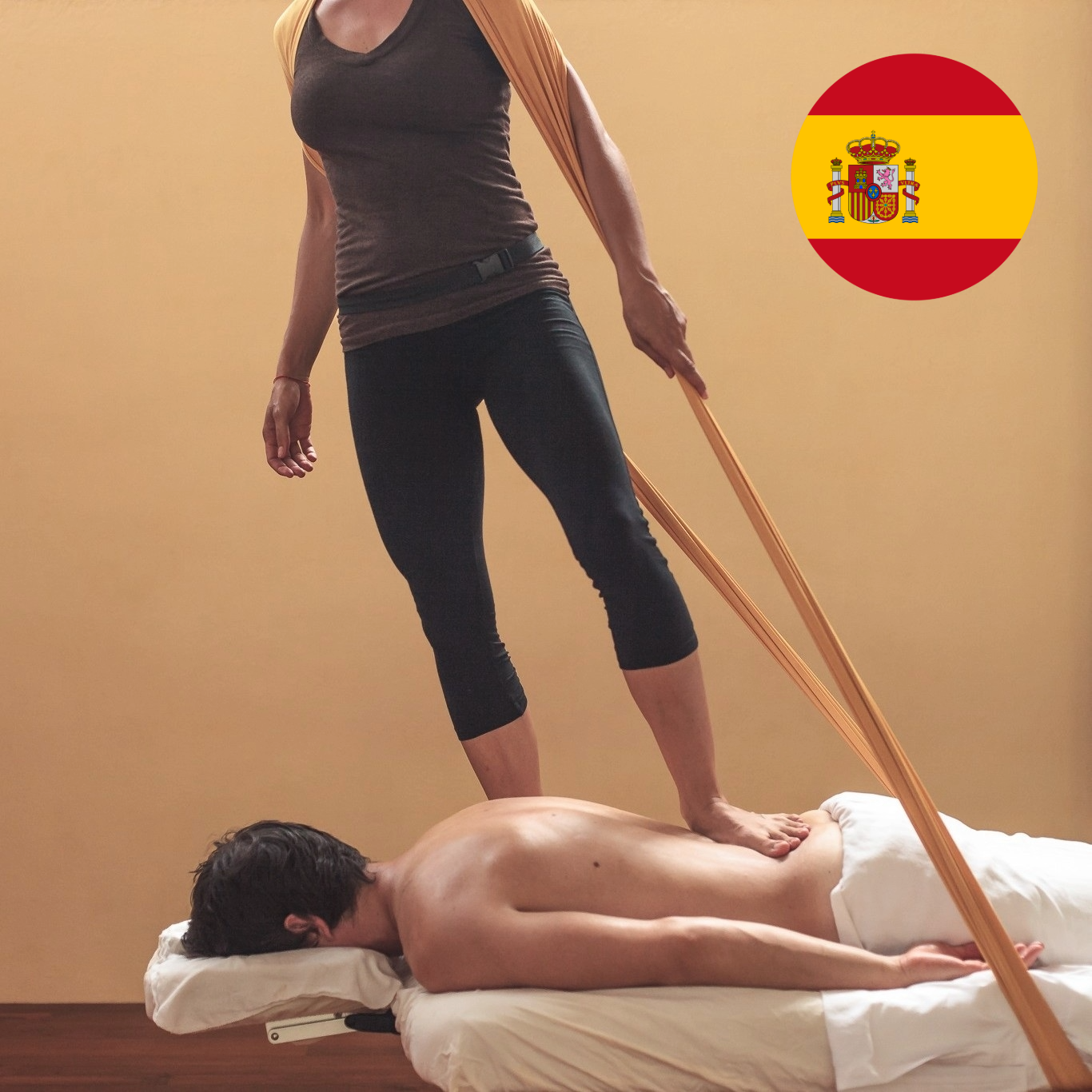
Sarga Bodywork Principiante en Línea (101)
Aquí comienza tu viaje con Sarga Bodywork.
Sabemos que la fascia responde de forma distinta al contacto amplio y sostenido de los pies que al de las manos. También sabemos que aún hay mucho misterio en cómo los cuerpos se transforman bajo un toque intencional. Este curso celebra tanto la ciencia que conocemos como el misterio que sigue vivo en cada proceso de sanación.
Aprenderás a trabajar con nuestro sistema de correas de tela y a desarrollar una forma de tocar lenta, presente y receptiva — una manera de escuchar con todo el cuerpo y encontrar la fascia justo donde está.
No necesitas experiencia previa. Ya sea que estés dando tus primeros pasos en el trabajo corporal o tengas años de práctica, este curso autodirigido te da la bienvenida desde cualquier lugar del mundo.
A lo largo del programa, aprenderas una secuencia completa de masaje Sarga Bodywork de 90 minutos. Pero más allá de la técnica, descubrirás una nueva forma de moverte: una que honra las antiguas tradiciones del masaje con pies descalzos y se nutre de la investigación moderna sobre la fascia.
A través del contacto intencional, el movimiento consciente y el ritmo pausado, aprenderás a crear el espacio que la fascia necesita para responder a su propio tiempo.
Importante: La compra y finalización de este curso hasta la sección Técnica son requisitos para asistir al curso presencial Sarga 101. Tenga en cuenta que los videos del curso están en inglés con subtítulos en español.
Pairs well with
Sarga Bodywork Principiante en Línea (101)
We're here to support you at every step of your Sarga Bodywork journey.
Whether you have questions about courses, equipment, or your practice, you'll find answers below or can connect directly with our team.
-
FAQ's
Find answers to common questions about courses, certification, equipment compatibility, and bringing Sarga Bodywork into your practice.
-
Contact Us
Get personalized support from our team for any questions about training, equipment selection, or integrating Sarga into your work.
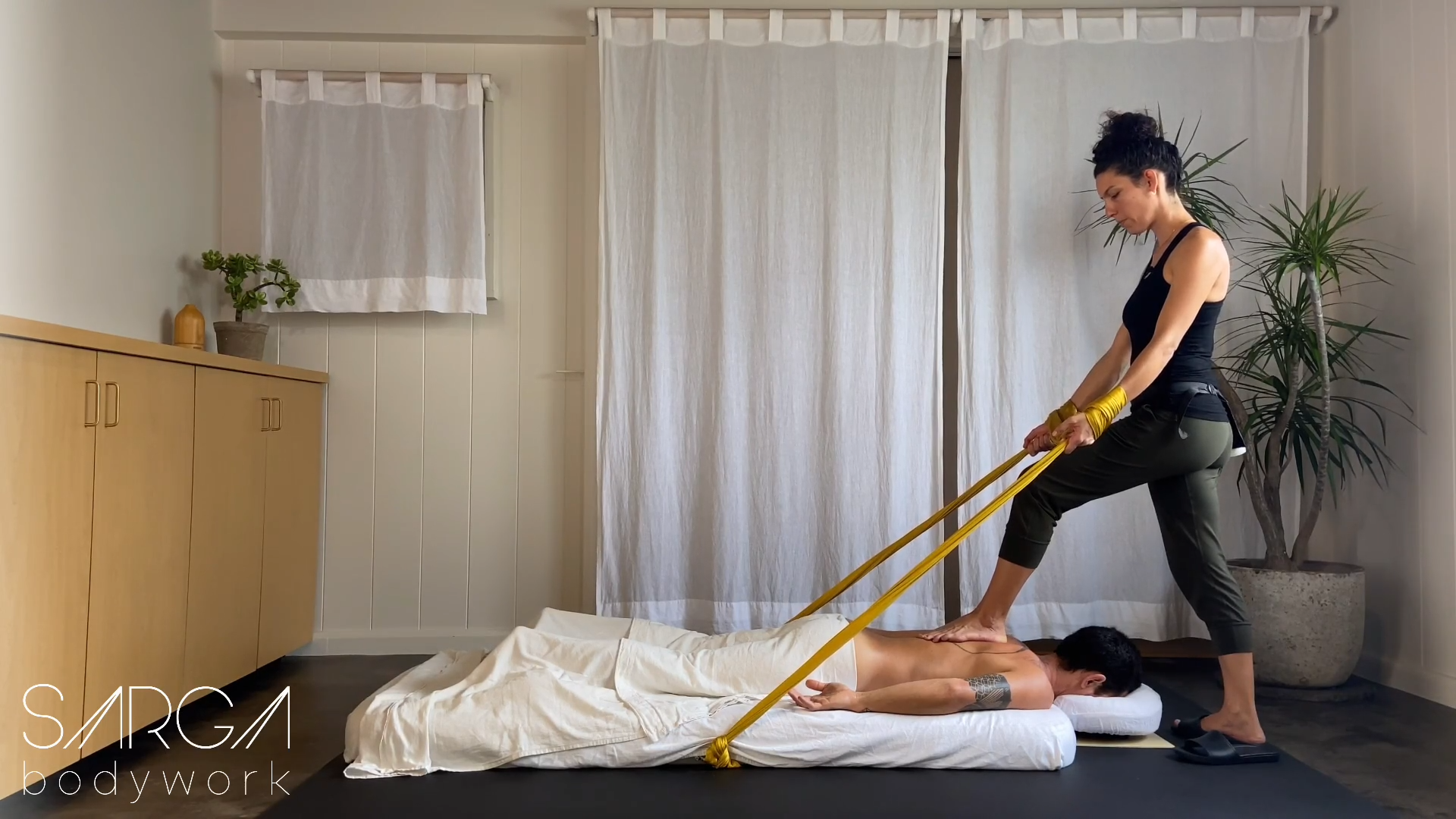
Please note that the videos in this course begin on a floor-based setup.
While most of Sarga Bodywork's floor-based techniques are the same when performed on a raised massage table, there are a few exceptions. These exceptions as well as equipment considerations for raised massage tables are also reviewed in this course.
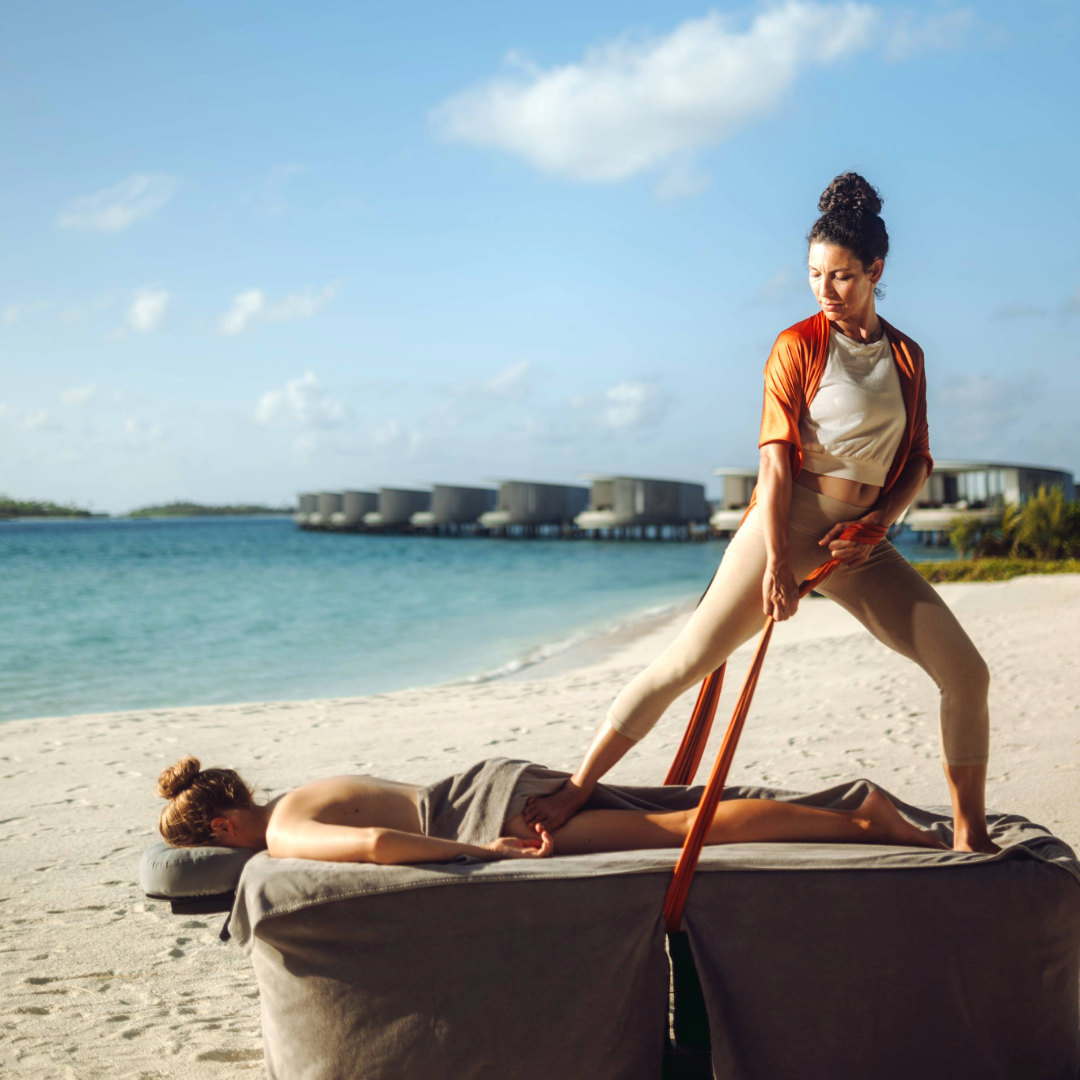
This course was created for:
- Entry-level bodyworkers curious to discover the fabulous world of barefoot massage. No prerequisites required!
- Any practitioner curious to find out if a Sarga Bodywork practice is right for them.
- Practitioners with a passion for myofascial bodywork.
- Practitioners who wish to be more mobile with their barefoot massage practice.
- Practitioners who intend to obtain Sarga Bodywork Certification.
Course Equipment
No Installation Needed
Choose this equipment bundle if you prefer not to install anything on your massage table.
This bundle includes all the required Sarga Bodywork equipment for this course.
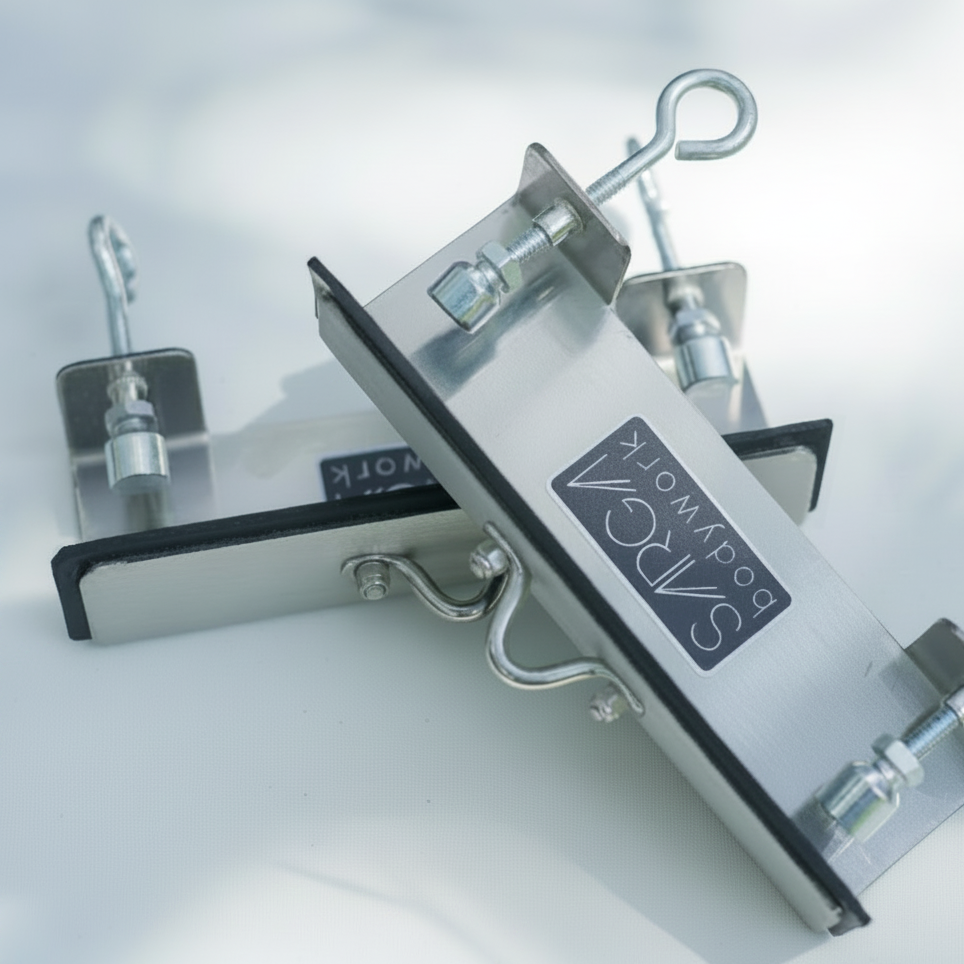


Course Equipment
Installation Required
Choose this equipment bundle if you are comfortable installing the system yourself.
You will need to screw the equipment into your massage table, which may affect the table’s warranty. This bundle includes all the required Sarga Bodywork equipment for this course.


Frequently Asked Questions
Get answers to common questions about Sarga Bodywork training, techniques, and equipment.
Where can I see the online course curriculum for Sarga Bodywork Beginner (Sarga 101)?
Sarga Bodywork Beginner (Sarga 101) is made up of three courses. You can view the curriculum for each course below:
What equipment do I need for Sarga Bodywork courses?
We aim to provide Sarga Bodywork equipment that matches your treatment style.
Before you make any purchases, please take some time to review the Tools & Materials sections of the online coursework so that you are aware of the safety and setup considerations for each treatment style.
Below is a recommended list of materials to help you get started.
For a floor-based practice:
- A portable massage table with “shiatsu release cables” or the ability to unfasten one end of both horizontal undercarriage cables
- Silk attachment hardware (Sarga Attachments for Floor-Based Massage Tables or Sarga Floor Loops - requires installation)
- Yoga blocks or a low stool between 8" and 12" tall for seated techniques
- A floor-based headrest
- Sanitizable treatment slippers
- A Sarga Silk
- MYO.RUB
For a raised-table practice:
- A massage table that meets all of the specs listed in the safety and equipment section below
- Silk attachment hardware (The Sarga Attachment for Portable, Raised Massage Tables or Sarga Floor Loops - requires installation)
- A stool between 25" and 30" tall for seated techniques
- Sanitizable treatment slippers
- A Sarga Silk
- MYO.RUB
For a futon/mat-based practice:
- A futon or therapy mat
- A Sarga Board or XL Sarga Board
- Yoga blocks or a low stool between 8" and 12" tall for seated techniques
- A floor-based headrest (if your mat is 4"+ tall)
- Sanitizable treatment slippers
- A Sarga Silk
- MYO.RUB
Who is a good match for Sarga Bodywork?
Therapists that would be a good match for a Sarga Bodywork practice will answer yes to all the questions below:
- Are you an experienced and skillful bodyworker?
- Do you have excellent balance and movement control?
- Do you have the capacity for exceptional focus, patience and grounded presence?
- Are you sensitive to your clients’ nervous system and contact preferences?
- Do you have a somatic practice such as Yoga, Pilates, dance, Feldenkrais, or martial arts?
- Are you passionate about exercise, movement, and health?
- Are you in excellent physical condition?
What kind of fitness is required for Sarga Bodywork?
Sarga Bodywork will absolutely get easier with practice, however learning this modality can be quite rigorous at first and excellent physical conditioning (particularly isometric strength), is a must in order to gain the most from a Sarga Bodywork course. Yoga, Pilates, dance, martial arts, or any full-bodied practice that encourages both strength and flexibility will help to condition you for practicing Sarga Bodywork.
For Sarga Bodywork courses on raised massage tables:
We understand that weight alone does not determine fitness, balance, or capability. However for safety reasons, we ask that you inform us if you are under 100 pounds, over 175 pounds, or 6' or more in height. We may want to inquire further to ensure that the techniques taught in our courses can be performed safely and within the working limits of the massage tables in our classroom, especially since the Sarga Silk allows practitioners to generate additional force beyond bodyweight. Note that if you are over 175lbs but can meet our 4 fitness requirements, we may have other options for you - lets chat!
Additionally, we have courses on floor-based massage tables and massage mats where biometrics and fitness are less of a consideration. While basic strength and conditioning is still important here, a floor-based practice provides practitioners a much wider and more stable working area. If you would like to discuss these options or anything else related to the points above, please contact us.
For more on practitioner weight and safety considerations, please review “Safety Considerations for Sarga Bodywork on Raised Massage Tables" under the “Equipment” section below.
4 fitness measurements:
Here are four fitness measurements that can help to gauge your ability to learn and perform Sarga Bodywork with success:
- The ability to balance on one foot for at least 1 minute without holding onto anything for support.
- Excellent cardiovascular conditioning and the ability to perform cardiovascular exercise (jogging, swimming, etc.) for 10-15 minutes without stopping.
- The ability to perform at least 3 sets of 20 squats.
- The ability to isometrically hold a plank for at least 1 minute.
If you would like some conditioning guidance to help you learn and perform Sarga Bodywork with confidence, our Sarga Fit online course is an excellent resource designed with the fitness demands of Sarga Bodywork in mind.
Why do you use your feet?
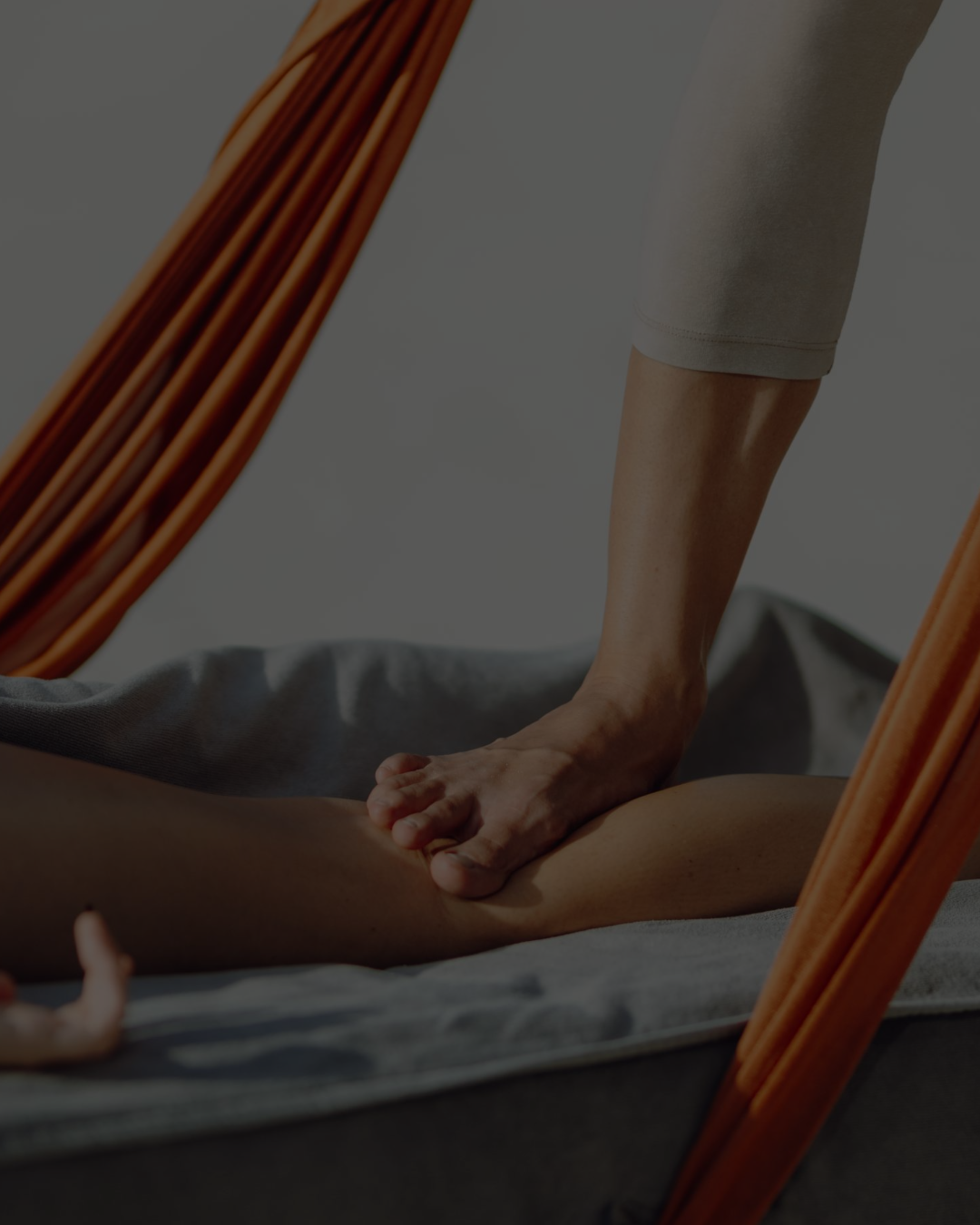
Feet are amazing manual therapy tools, and as bodyworkers, the ability to perform massage with our feet opens up a whole new set of biomechanical options.
Barefoot massage is an ancient practice, most notably in parts of Asia and the Pacific, and this practice encompasses manual therapy techniques that are applied to recipients' bodies with the practitioner's bare feet.
These techniques often mimic massage techniques applied with therapists' hands, however a notable difference is that barefoot massage techniques are less "pointed" and have the ability to deliver deeper, more consistent pressure due to the broader contact surface area of therapists' feet and the gravitational force that can be accessed for the delivery of the techniques.
What is myofascial technique?
The prefix “myo” refers to muscle tissue. Fascia is the connective tissue that forms a whole-body, continuous, 3-D matrix of structural support and wraps around every single cell, connecting cells to organs, organs to organ systems, and interpenetrates every muscle in the entire body.
We define myofascial technique as manual therapy characterized by slow, sustained, oblique, and high-tack contact with the aim of stimulating a stretch response in the fascia associated with muscle (myo) tissue (see shear-force).
Myofascial massage can help to treat muscle pain, inflammation and restriction, by relaxing contracted muscles, stimulating length and hydration in the tissue, and improving circulation.
What is bodywork vs. massage?
Referencing Mosby’s Dictionary of Complementary and Alternative Medicine:
Massage is the application of diverse manual techniques of touch and stroking to muscles and soft tissue to achieve relaxation and improve clients' well-being.
Bodywork applies therapeutic touch paradigms with the aim of restoring health and balance to the entire person by working through the body. In other words, the body is viewed as a doorway to access systemic health.
How is Sarga Bodywork different from other foot-based massage techniques?
While Sarga Bodywork is a barefoot massage method that uses the feet as primary tools for manual therapy techniques, and while our instructors have background in the Ashiatsu pioneered by Ruthie Hardee, as well as Thai Massage, barefoot Shiatsu, and Chiavutti Thirumal of South India, Sarga Bodywork as a modality is none of the above.
We draw inspiration from these methodologies and we honor our teachers and the rich lineages that inform and inspire our work. But just as there are many methods that utilize the hands as manual therapy tools, Sarga is a new addition to the growing world of foot-based massage.
What makes Sarga most distinct from the methodologies listed above is:
- The use of tensional force via our proprietary equipment
- Myofascial technique* and the sparing use of lubrication
- Directionally oriented myofascial technique.**
*There are many schools of thought around fascia and the manipulation of fascia, however we define myofascial technique here as manual therapy characterized by sustained, oblique, and high-tack contact with the aim of stimulating a stretch response in the fascia associated with muscle (myo) tissue.
**We draw inspiration from a few theories of Structural Integration and the work of Ida Rolf. While Sarga Bodywork is in no way a form of Structural Integration, it employs directionally oriented myofascial technique, or techniques applied in specific directions that aim to help in reversing patterns of structural inefficiency in the body.
How do I become a Certified Sarga Bodywork Practitioner?
Sarga Bodywork Certification is needed if you are planning to offer Sarga as a service in your practice. Getting your certification allows you to advertise your Sarga Bodywork services, gives you access to marketing materials and comes with discounts & exclusive offers.
In order to complete Sarga Bodywork certification, you must successfully complete the following steps:
- Complete Sarga Bodywork Beginner (Sarga 101) online or in-person.
- Complete the course quizzes in the online manual with a grade of 80% or better.
- Purchase Sarga Bodywork Certification.
- Complete 20 practice sessions on at least 8 different individuals and submit 20 Practitioner Feedback Forms for review (the downloadable form is available with Sarga Bodywork Certification).
- Provide proof of massage licensure in the state/country where you practice (if applicable).
- Complete a 1-hour live online evaluation with a Sarga Bodywork instructor in which you will be expected to demonstrate core techniques outlined in Sarga 101 (evaluations can be performed on either a floor-based table or a raised massage table).
Upon successful completion of the certification steps, you will receive the following:
- Ability to use CERTIFIED SARGA BODYWORK PRACTITIONER® to promote the Sarga Bodywork treatments and techniques that you offer in your manual therapy practice.
- A certificate signed by Sarga Bodywork founder, Jivatma Massaguer that states you are a CERTIFIED SARGA BODYWORK PRACTITIONER®.
- Listing in the Sarga Bodywork Practitioner Directory.
- Sarga Bodywork logos and stock imagery that you are welcome to use on your marketing and informational media (social media platforms, promotional print materials, etc.).
What is the suggested learning flow for Sarga Bodywork?
There are so many different learning styles and skill levels that affect our students' ability to master Sarga Bodywork, but in general here is our suggested learning flow:
1. Enroll in Sarga Bodywork Beginner (Sarga 101) and review everything up to the Technique section before deciding on what kind of Sarga equipment to purchase.
2. Purchase equipment, continue with the online coursework, and practice regularly for 1-3 months before enrolling in an in-person course.
3. Attend Sarga 101 in-person. Begin practicing the techniques immediately after your class to optimize integration of the techniques.
Note: Enrolling in Sarga 102 In-Person right after Sarga 101 In-Person is an option if:
- You are a quick and confident learner.
- You have already gained proficiency in Sarga 101 techniques independently with the online coursework.
4. Practice regularly for 1-3 months while completing the 20 practice sessions required for Sarga Bodywork Certification.
5. Complete Sarga Bodywork Certification
6. Enroll in Sarga Bodywork Advanced (Sarga 102) Online and practice the techniques independently before attending Sarga 102 In-Person.
Table or floor?
Sarga Bodywork has equipment and courses that are designed for either raised massage tables or floor-based mats. While many barefoot bodyworkers prefer to work on portable raised massage tables, others may choose to work on the floor because of the stability that a larger working area provides, or because they can incorporate Sarga Bodywork into their existing floor-based bodywork practices such as Thai massage. Each configuration has its unique benefits and limitations, and students will tend to gravitate toward one or the other.
Note that all of the raised-table techniques taught in our courses can be applied to a floor-based practice, however many techniques taught in our floor-based courses cannot be applied to a raised-table practice.
Benefits of Floor vs. Table:
- Larger and more stable working area.
- Floor-based techniques have an easier learning curve.
- If you do not meet our fitness measurements, our floor-based courses can still be accessible.
- If you are over 175 lbs and/or over 6 feet in height, a floor-based practice might suit you better.
- Easily integrated with other floor-based bodywork practices.
Benefits of Table vs. Floor:
- All the material our raised-table courses can be applied to a floor-based practice.
- If you already have a raised table practice, your clients do not need to acclimate to a different configuration.
- Easier to incorporate hand-based techniques.
- Elderly clients and clients with impairments have less trouble getting on/off a raised massage table.
What are the safety & equipment considerations for Sarga Bodywork on raised massage tables?
Sarga Bodywork is a rigorous practice that requires excellent physical conditioning. Strength, flexibility and a fine-tuned kinesthetic awareness are a must for practicing Sarga Bodywork safely and without risking injury to both practitioner and recipient.
All Sarga Bodywork techniques are done with just one foot at a time on the recipient’s body, and the therapist’s full body weight is never fully on the recipient, so having a heavier build is not problematic if abiding by the limits of your massage table’s design and weight capacity.
Raised massage tables used for Sarga Bodywork must meet the following requirements:
- Must be of excellent quality and condition.
- Must have an adequate “working weight” capacity. There is a working weight limit on every massage table, which usually accounts for the weight of the recipient plus the pressure of the exerted force via the massage therapist. For foot-based massage modalities on a raised table, the massage table’s working weight must be able to support the recipient’s bodyweight, plus the therapist’s bodyweight, plus the moving pressure exerted by the massage therapist. Most massage tables have at least a 500-pound working weight capacity, but massage tables made by reputable massage table manufacturers can usually support much more (for example, Earthlite or Oakworks massage tables are very well made and are designed to easily hold over 2,500 pounds (static weight), with a working weight capacity of 750 pounds or more). Check the label posted beneath your massage table or research your massage table’s make and model to make sure that it meets your working weight requirements.
- Must have a medium/firm foam (massage tables with soft/thick foam cushioning don’t give enough standing stability for therapists.
- The width of your massage table must be no smaller than 30” (tables that are between 32” and 36” wide are ideal).
- For practitioners over 6 feet in height we recommend no less than a 35" wide table, or a 32" table with a low height range capacity.
- Sarga Bodywork methodology works best at a lower-than-average table height range (slightly above therapist's knee level). This lower height facilitates proper body mechanics per our methods and increases working stability for foot-based techniques.
- The rubber bumpers or any other obstructions on either rail of your massage table must be removed as the Sarga Strap can get caught on these.
- Must have non-slip rubber pads on the legs.
- The Sarga Massage Table by Earthlite is a portable massage table that meets all of the requirements listed above.
- Stationary and electric massage tables can also be used for Sarga Bodywork and are good because they are very stable and have higher weight capacities than portable massage tables. However, width and foam density still need to be considered.
- Massage tables that have extra moving parts (such as a for a tilt feature) tend to be problematic over time with the added wear and tear of barefoot massage.
In-Person Courses vs. Online Courses?
We get this question a lot, and while we recognize that there is no substitute for in-person learning environments, especially for kinesthetic and touch-based trades, there are benefits and drawbacks to both in-person and online learning.
Online Courses
Online education is a rapidly evolving interface that has made leaps and bounds in the last several years. Dynamic, intuitive, and user-friendly platforms have made digital learning increasingly seamless and effective. With Sarga Bodywork's online courses, you will gain access to a step-by-step learning experience that includes high-definition video instruction, accompanying written materials, and access to a private Facebook group for ongoing support. Here are a few key benefits of starting your Sarga Bodywork training online:
- Learn from home!
- Move through the course curriculum at your own speed.
- Start with Sarga 101 Online to see if you like the material and join an in-person course later.
- Lifetime access and archivable format gives students the ability to reference the material as needed.
- Online course cost is more affordable than live courses.
- No travel or travel expenses
In-Person Courses
Sarga Bodywork's in-person courses are physically and mentally demanding, technique-based programs. A lot of material is packed into these courses and proficiency in the techniques is gained with subsequent practice of the material after class. Our curriculum is designed to build on itself, becoming more integrated with each day of class. Be sure to prepare your body and mind for a rigorous learning experience! Here are a few key benefits of starting your Sarga Bodywork training in-person:
- Traditional, time-tested live learning format encompasses visual, verbal and kinesthetic learning styles.
- Group classes help to facilitate accountability, feedback, and camaraderie.
- Ability to receive real-time feedback from a skilled instructor.
- Ability to feel the techniques from other students and an instructor.
Can't decide which track is best for you? Contact us to schedule a time to chat.
SARGA Marketing, Trademark & Patents
See our intellectual property statement here.